
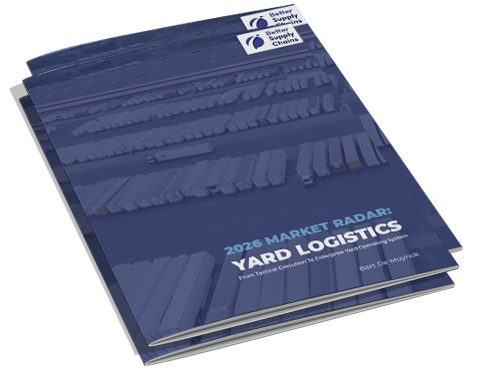
Market Radar: Yard Logistics
From Tactical Execution to Enterprise Yard Operating System
Access the full report
Please enter your information in the form below:
Form
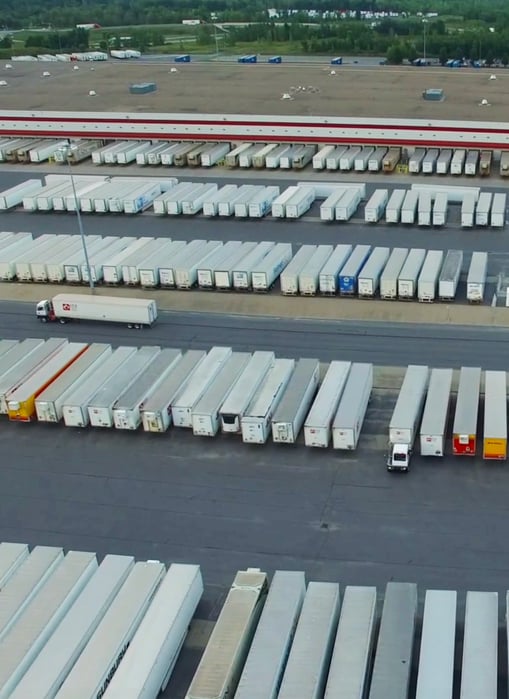
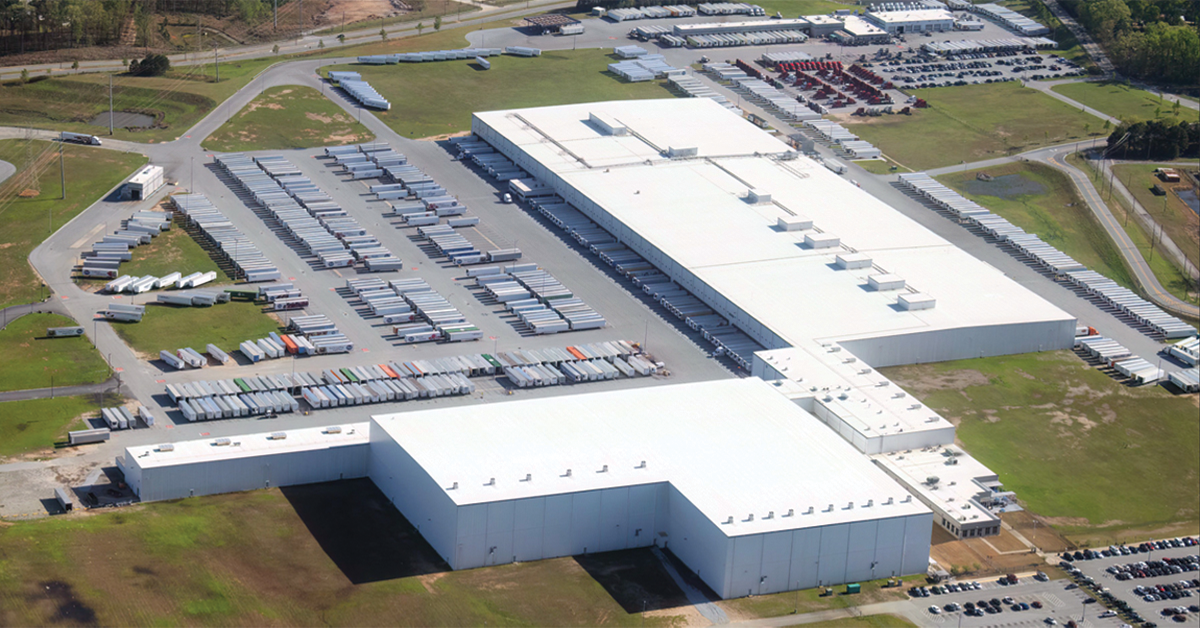
Yard operations have evolved from a local execution function into a material enterprise risk and performance lever. This Market Radar report examines how yard execution now directly influences cost variability, service reliability, safety exposure, and sustainability outcomes across multi-site supply chain networks.
Rising volatility, labor constraints, electrification pressure, and declining tolerance for service disruption are exposing the limits of traditional yard models. Labor-centric outsourcing, site-level management, and standalone technology may support activity, but they fail to deliver enterprise-wide governance, consistency, and accountability.
The market is shifting toward integrated operating models built around a defined yard operating system, aligning workforce management, assets, processes, technology, safety, and sustainability under shared governance and outcome-based accountability.
For enterprise leaders, the implication is clear: yard operations must be evaluated as a strategic execution layer, not a tactical service. Organizations that act now will be better positioned to reduce variability, protect performance, and build more resilient, scalable supply chains.
Key market signals identified
1. Yard operations are now an enterprise execution risk: Once managed locally, yard performance now directly affects network reliability, cost variability, safety, service levels, and sustainability outcomes.
2. Execution governance matters more than planning sophistication: Volatility, labor constraints, and electrification pressure are exposing weaknesses at the execution layer where unmanaged yards amplify variability.
3. The core gap is operating discipline, not technology: Most yards lack standardized workflows, accountability, and enterprise oversight. Visibility alone has not delivered consistent outcomes.
4. Yard inefficiencies are hidden but material: Their impact shows up indirectly through detention, overtime, expediting, inventory delays, safety exposure, emissions leakage, and cost volatility.
5. Traditional yard models do not scale: In-house management, labor-focused outsourcing, and standalone YMS deployments support activity but fail to deliver enterprise-level governance or outcome ownership.
6. Outsourced yard logistics is shifting to execution governance: Leading models move beyond task fulfillment toward standardized operating systems with shared accountability for outcomes.
7. Electrification is exposing execution maturity gaps: With hardware parity increasing, differentiation depends on utilization discipline, standardized workflows, and governed execution.
8. Transition capability is now a prerequisite: Enterprise adoption depends on the ability to standardize live operations without service disruption, safety risk, or regression.
9. Yard operating systems as the new template for enterprise yard operations: A standardized operating model aligned to enterprise service, cost, safety, and sustainability objectives.
10. Provider evaluation criteria must evolve: Cost and coverage are no longer sufficient. Enterprises increasingly prioritize governance, standardization, transition capability, and shared accountability for results.
.png)
ABOUT THE AUTHOR
Bart De Muynck is a globally recognized supply chain executive and advisor focused on operational execution, technology strategy, and performance at scale. With over 30 years of experience and a former role as Vice President at Gartner, Bart has advised leading manufacturers, retailers, and logistics providers on how to move beyond fragmented tools toward integrated operating models. His perspective emphasizes connecting operations with technology to turn strategy into consistent, measurable results across complex supply chain networks.